Buy tpskp.eu ?
We are moving the project
tpskp.eu .
Are you interested in purchasing the domain
tpskp.eu ?
domain@kv-gmbh.de · 0541-91531010
Buy tpskp.eu ?
How do you round recurring decimals?
To round recurring decimals, you can either stop at a certain point or use a bar notation to indicate the repeating pattern. For example, if you have the decimal 0.3333..., you can round it to 0.33 or 0.34 depending on the desired level of precision. If the recurring decimal is a longer pattern, you can round it by looking at the digit that follows the repeating pattern. **
How do you round decimals in math?
To round decimals in math, you first determine the place value you want to round to (e.g., tenths, hundredths). Then, look at the digit to the right of the desired place value. If that digit is 5 or greater, you round up the desired place value. If it is less than 5, you leave the desired place value as it is. Finally, adjust any digits to the right of the desired place value to zero. **
Similar search terms for Decimals
Top-Angebote
Products related to Decimals:
-
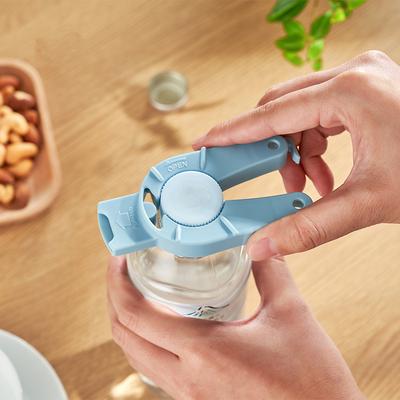
Multisell Products Hub Magnetic Bottle Opener For Household Mineral Water Plastic Beverage Bottles And Cap Opening, Kitchen Accessories Gadgets blueEffortless Cap Opening for Everyday Kitchens Upgrade your routine with this 1 pcs Kitchen Accessories Gadgets Magnetic Bottle Opener for Household Mineral Water Plastic Beverage Bottles and Cap Opening designed for convenience and comfort. It makes...34,97 $*Shipping: 0,00 $Secure redirect to the provider
-
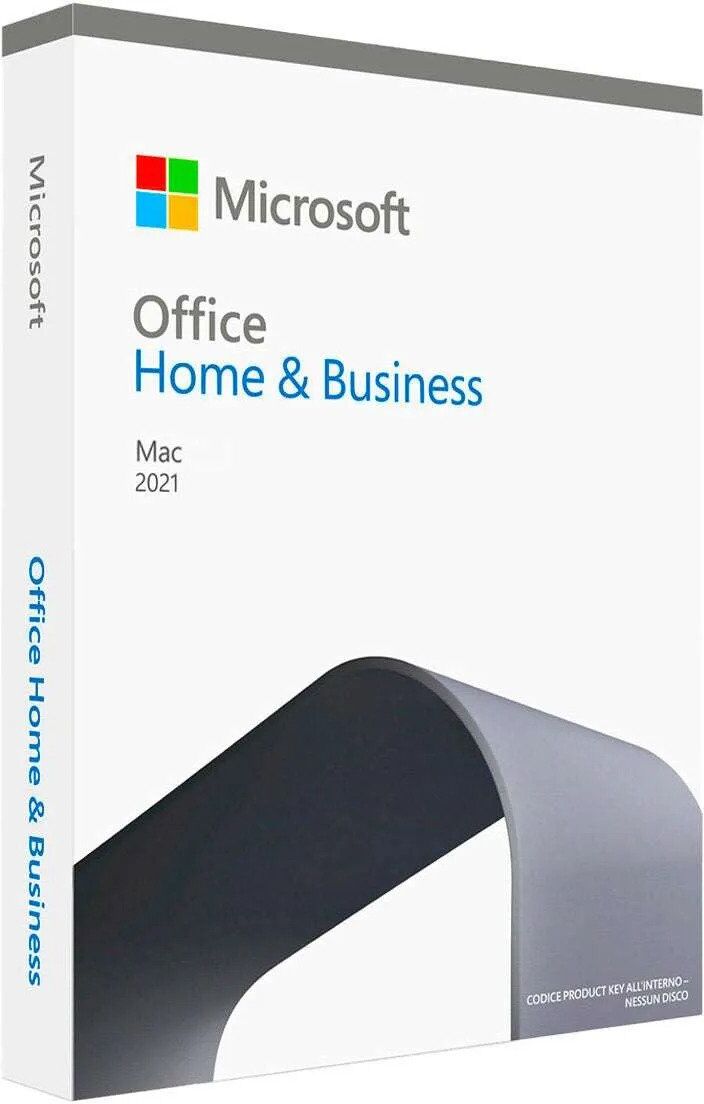
Microsoft Office 5 DevicesMicrosoft Office 5 Devices. Lifetime licence for 5 devices, delivered digitally by email. Includes essential productivity applications for work and home, multilingual support where available, official download access and installation guidance. No physical product or shipping is required.249,95 £*Shipping: 0,00 £Secure redirect to the provider
-
Microsoft Office 3 DevicesMicrosoft Office 3 Devices. Lifetime licence for 3 devices, delivered digitally by email. Includes essential productivity applications for work and home, multilingual support where available, official download access and installation guidance. No physical product or shipping is required.169,90 £*Shipping: 0,00 £Secure redirect to the provider
-
Innovation: Fourth Edition Board Game by Asmadi Games for 2-4 PlayersInnovation: Fourth Edition is a strategic card game for 2–4 players. Build a civilization through ideas, inventions, and cultural advances by developing technologies and sharing achievements. Each card can provide different benefits depending on how it's used, creating varied strategies and unexpected shifts throughout the game. This edition includes updated artwork and streamlined rules for the expansions, as well as Age 11 cards for each set and the new expansion, The Unseen, which adds further possibilities to the core experience. With hundreds of cards and numerous combinations, every game can unfold differently.18,29 £*Shipping: 1,99 £Secure redirect to the provider


-
How do I create recurring decimals in Word?
To create recurring decimals in Word, you can use the Equation Editor feature. First, go to the Insert tab and click on Equation in the Symbols group. Then, select the Fraction structure and enter the non-recurring part of the decimal in the numerator and the recurring part in the denominator. Finally, highlight the recurring part and go to the Equation Tools Design tab, click on the More button in the Structures group, and select Overbar to create the repeating decimal. **
-
How do you approximate recurring decimals as fractions?
To approximate recurring decimals as fractions, you can use the concept of geometric series. For example, to convert 0.333... to a fraction, you can represent it as 0.333... = 3/10 + 3/100 + 3/1000 + ... = 3/10(1 + 1/10 + 1/100 + ...). Using the formula for the sum of an infinite geometric series, you can simplify this expression to get 1/3. This process can be applied to other recurring decimals as well to approximate them as fractions. **
-
Can you help me with recurring decimals in math?
Yes, I can help you with recurring decimals in math. Recurring decimals are numbers that repeat indefinitely, such as 0.3333... or 0.7272... To convert a recurring decimal into a fraction, you can use algebraic manipulation to solve for the repeating portion of the decimal and then express it as a fraction. I can guide you through the steps to convert recurring decimals into fractions and help you understand the concept better. **
-
What is the difference between terminating and repeating decimals?
Terminating decimals are decimals that have a finite number of digits after the decimal point, such as 0.75 or 3.25. On the other hand, repeating decimals are decimals that have a pattern of digits that repeat indefinitely, such as 0.3333... or 0.454545... Terminating decimals can be expressed as a fraction, while repeating decimals can also be expressed as a fraction using a bar notation to indicate the repeating pattern. **

How does the conversion of areas with decimals work?
The conversion of areas with decimals involves converting the decimal to the appropriate unit of measurement. For example, if you have an area of 3.5 square meters and you want to convert it to square centimeters, you would multiply 3.5 by 10,000 (since there are 10,000 square centimeters in a square meter) to get 35,000 square centimeters. Similarly, if you want to convert 4.75 square feet to square inches, you would multiply 4.75 by 144 (since there are 144 square inches in a square foot) to get 684 square inches. The key is to know the conversion factor between the two units and use it to perform the conversion. **
How do I calculate the average using written division with decimals?
To calculate the average using written division with decimals, you first add up all the numbers you want to find the average of. Then, you divide the sum by the total number of values. For example, if you want to find the average of 3.5, 4.2, and 2.8, you would add them together (3.5 + 4.2 + 2.8 = 10.5) and then divide by 3 (since there are 3 values), giving you an average of 3.5. **
Top-Angebote
Products related to Decimals:
-
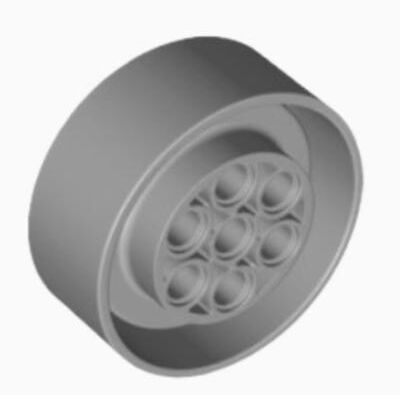
Lush Living Finds Perforated Brick Assembly Toy Accessories With Technology Mechanical Wheels Perforated Brick Assembly Toy Accessories With Technology Mechanical WheelsEnhance Creativity with Technology Mechanical Wheels Unlock the power of innovation with our technology mechanical wheels, designed specifically for perforated brick assembly toy accessories. Whether you are a hobbyist or a seasoned builder, these...43,97 $*Shipping: 0,00 $Secure redirect to the provider
-
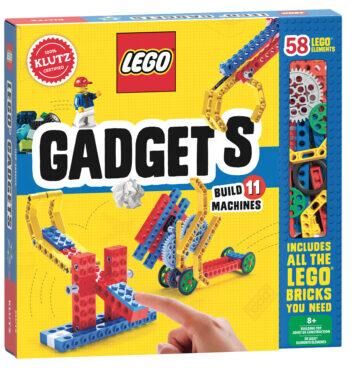
Klutz: LEGO GadgetsThis activity kit will have you building 11 machines including a gravity powered car and a wacky boxing robot. The fun doesn't stop once you've completed all of the projects in the book - open-ended prompts will inspire you to continue experimenting...24,99 $*Shipping: 0,00 $Secure redirect to the provider
-
Multisell Products Hub Magnetic Bottle Opener For Household Mineral Water Plastic Beverage Bottles And Cap Opening, Kitchen Accessories Gadgets blueEffortless Cap Opening for Everyday Kitchens Upgrade your routine with this 1 pcs Kitchen Accessories Gadgets Magnetic Bottle Opener for Household Mineral Water Plastic Beverage Bottles and Cap Opening designed for convenience and comfort. It makes...34,97 $*Shipping: 0,00 $Secure redirect to the provider
-
Microsoft Office 5 DevicesMicrosoft Office 5 Devices. Lifetime licence for 5 devices, delivered digitally by email. Includes essential productivity applications for work and home, multilingual support where available, official download access and installation guidance. No physical product or shipping is required.249,95 £*Shipping: 0,00 £Secure redirect to the provider
-
How do you round recurring decimals?
To round recurring decimals, you can either stop at a certain point or use a bar notation to indicate the repeating pattern. For example, if you have the decimal 0.3333..., you can round it to 0.33 or 0.34 depending on the desired level of precision. If the recurring decimal is a longer pattern, you can round it by looking at the digit that follows the repeating pattern. **
-
How do you round decimals in math?
To round decimals in math, you first determine the place value you want to round to (e.g., tenths, hundredths). Then, look at the digit to the right of the desired place value. If that digit is 5 or greater, you round up the desired place value. If it is less than 5, you leave the desired place value as it is. Finally, adjust any digits to the right of the desired place value to zero. **
-
How do I create recurring decimals in Word?
To create recurring decimals in Word, you can use the Equation Editor feature. First, go to the Insert tab and click on Equation in the Symbols group. Then, select the Fraction structure and enter the non-recurring part of the decimal in the numerator and the recurring part in the denominator. Finally, highlight the recurring part and go to the Equation Tools Design tab, click on the More button in the Structures group, and select Overbar to create the repeating decimal. **
-
How do you approximate recurring decimals as fractions?
To approximate recurring decimals as fractions, you can use the concept of geometric series. For example, to convert 0.333... to a fraction, you can represent it as 0.333... = 3/10 + 3/100 + 3/1000 + ... = 3/10(1 + 1/10 + 1/100 + ...). Using the formula for the sum of an infinite geometric series, you can simplify this expression to get 1/3. This process can be applied to other recurring decimals as well to approximate them as fractions. **
Similar search terms for Decimals
-
Microsoft Office 3 DevicesMicrosoft Office 3 Devices. Lifetime licence for 3 devices, delivered digitally by email. Includes essential productivity applications for work and home, multilingual support where available, official download access and installation guidance. No physical product or shipping is required.169,90 £*Shipping: 0,00 £Secure redirect to the provider
-
Innovation: Fourth Edition Board Game by Asmadi Games for 2-4 PlayersInnovation: Fourth Edition is a strategic card game for 2–4 players. Build a civilization through ideas, inventions, and cultural advances by developing technologies and sharing achievements. Each card can provide different benefits depending on how it's used, creating varied strategies and unexpected shifts throughout the game. This edition includes updated artwork and streamlined rules for the expansions, as well as Age 11 cards for each set and the new expansion, The Unseen, which adds further possibilities to the core experience. With hundreds of cards and numerous combinations, every game can unfold differently.18,29 £*Shipping: 1,99 £Secure redirect to the provider
-
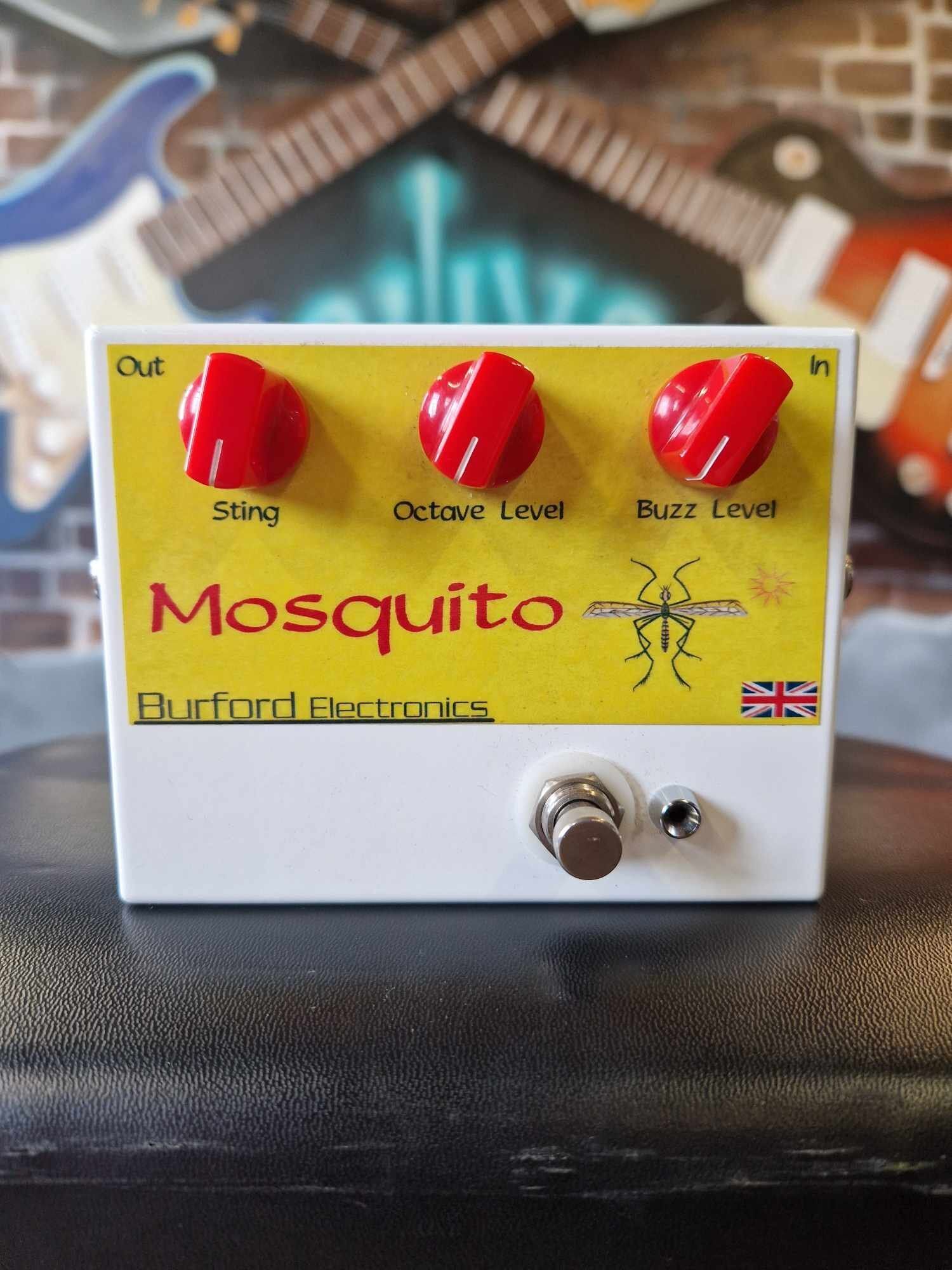
Burford Electronics Mosquito Fuzz Pedal Original - RefurbishedThis is a Burford Electronics Mosquito Fuzz Pedal. The Mosquito is a Fuzz/Octave pedal with a pretty unique sound, being closer to a fuzz more than a distortion this pedal delivers high octane fuzz sounds that will leave a sting. Here's what Burford Electronics say about the Mosquito Pedal: “A unique Octave up fuzz, which will give you pure fuzz on one twist of a knob & octave fuzz on one twist of another knob. So you can have your fuzz setting for a rich body & add octave fuzz to it or turn the fuzz down & just use the octave fuzz control for cutting lead. There is also a control called Sting, this is a tone filter that alters the voice of the octave from sharp to mellow. The octave is not over the top, on the lower register it is quite subtle, you can even play power chords and it holds together extremely well. Without that horrible modulation that is associated with some analogue octave up pedals, even some of the legendary expensive ones. Try soloing somewhere from the 8th fret upwards, it is very responsive and particularly so around 12th/15th fret and even higher. Neck and back pick ups give different sounds. Even playing positions will give different responses.”120,00 £*Shipping: 0,00 £Secure redirect to the provider
-
HARPERCOLLINS Creative Confidence by Tom & David Kelley – Unleashing Your Creative Potential & Innovation MindsetA powerful and inspiring book from the founders of IDEO, the award-winning design firm, on unleashing the creativity that lies within each and every one of us. Too often, companies and individuals assume that creativity and innovation are the domain of the ‘creative types’. But two of the foremost experts in innovation, design and creativity on the planet show us that each and every one of us is creative. In an entertaining and inspiring narrative that draws on countless stories from their work at IDEO, and with many of the world's top companies and design firms, David and Tom Kelley identify the principles and strategies that will allow us to tap into our creative potential in our work lives, and in our personal lives, allow us to think outside the box in terms of how we approach and solve problems. ‘Creative Confidence’ is a book that will help each of us be more productive and successful in our lives and in our careers.4,95 £*Shipping: 1,99 £Secure redirect to the provider
-
Can you help me with recurring decimals in math?
Yes, I can help you with recurring decimals in math. Recurring decimals are numbers that repeat indefinitely, such as 0.3333... or 0.7272... To convert a recurring decimal into a fraction, you can use algebraic manipulation to solve for the repeating portion of the decimal and then express it as a fraction. I can guide you through the steps to convert recurring decimals into fractions and help you understand the concept better. **
-
What is the difference between terminating and repeating decimals?
Terminating decimals are decimals that have a finite number of digits after the decimal point, such as 0.75 or 3.25. On the other hand, repeating decimals are decimals that have a pattern of digits that repeat indefinitely, such as 0.3333... or 0.454545... Terminating decimals can be expressed as a fraction, while repeating decimals can also be expressed as a fraction using a bar notation to indicate the repeating pattern. **
-
How does the conversion of areas with decimals work?
The conversion of areas with decimals involves converting the decimal to the appropriate unit of measurement. For example, if you have an area of 3.5 square meters and you want to convert it to square centimeters, you would multiply 3.5 by 10,000 (since there are 10,000 square centimeters in a square meter) to get 35,000 square centimeters. Similarly, if you want to convert 4.75 square feet to square inches, you would multiply 4.75 by 144 (since there are 144 square inches in a square foot) to get 684 square inches. The key is to know the conversion factor between the two units and use it to perform the conversion. **
-
How do I calculate the average using written division with decimals?
To calculate the average using written division with decimals, you first add up all the numbers you want to find the average of. Then, you divide the sum by the total number of values. For example, if you want to find the average of 3.5, 4.2, and 2.8, you would add them together (3.5 + 4.2 + 2.8 = 10.5) and then divide by 3 (since there are 3 values), giving you an average of 3.5. **
* All prices are inclusive of VAT and, if applicable, plus shipping costs. The offer information is based on the details provided by the respective shop and is updated through automated processes. Real-time updates do not occur, so deviations can occur in individual cases. ** Note: Parts of this content were created by AI.